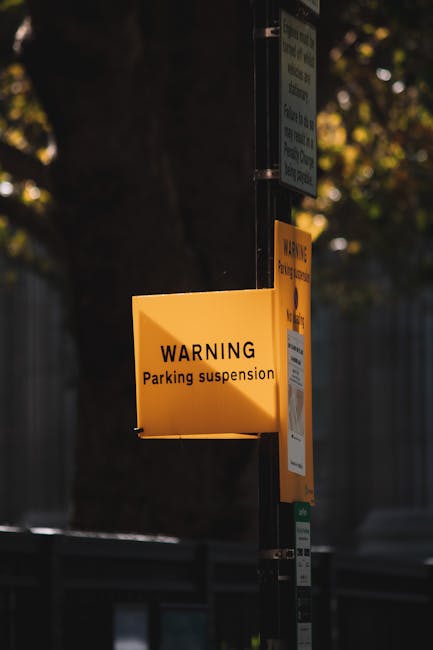




Newham parking suspensions and loading bay rules for removals
Posted on 17/08/2026
If you are moving house, clearing a flat, or delivering furniture in East London, a parking problem can derail the whole day faster than you'd expect. Newham parking suspensions and loading bay rules for removals are one of those unglamorous details that suddenly become the most important thing on the job. Get them wrong and you may face delays, extra carrying distance, awkward double-parking, or even a penalty. Get them right and the move feels calmer, quicker, and a lot more professional.
In practical terms, these rules affect where a removal van can stop, how long it can stay there, and whether a suspended bay or loading bay is actually usable on the day. This guide breaks everything down in plain English: what it means, why it matters, how to plan around it, and the mistakes that catch people out most often.

Contents
- Why Newham parking suspensions and loading bay rules for removals matters
- How Newham parking suspensions and loading bay rules for removals works
- Key benefits and practical advantages
- Who this is for and when it makes sense
- Step-by-step guidance
- Expert tips for better results
- Common mistakes to avoid
- Tools, resources and recommendations
- Law, compliance, standards, or best practice
- Options, methods, or comparison table
- Case study or real-world example
- Practical checklist
- Conclusion
- Frequently asked questions
Why Newham parking suspensions and loading bay rules for removals Matters
For removals, parking is not just a convenience. It is part of the logistics. A van that cannot stop close to the property changes everything: carrying distances get longer, heavy items become harder to move safely, time drifts away, and neighbours start wondering what on earth is happening outside their window. That is especially true on busy residential streets, near shopfronts, or around shared access roads where space is tight from the start.
Loading bays and suspended bays exist to manage traffic, access, and short-term stopping. The catch is that a bay that looks useful from the pavement may not be available for your move at all, or it may only be usable in specific circumstances. For a removals team, that is not a minor detail. It can decide whether the job runs smoothly or turns into a chain of small setbacks. To be fair, even a ten-metre difference in parking can matter when you are carrying wardrobes, white goods, or boxed-up family belongings.
There is also a financial angle. A rushed move is more likely to cause overtime, missed lift slots, extra van moves, or avoidable damage. If you are organising a move in East Ham or elsewhere in Newham, it pays to understand the parking side early rather than scrambling at the kerbside with half the hallway already packed.
Expert summary: In removals, access is as important as transport. The closer and more predictable your parking plan, the safer, faster, and less stressful the move tends to be.
If you are planning a broader move and want to reduce the usual moving-day friction, it can also help to read practical guidance on how to move houses with ease and streamlining the packing side of the job. Parking is only one piece of the puzzle, but it is a big one.
How Newham parking suspensions and loading bay rules for removals Works
In simple terms, a parking suspension temporarily removes normal parking rights from a specific bay or section of road. Councils use suspensions for works, access needs, safety, or special circumstances. A loading bay, meanwhile, is a marked area intended for loading and unloading, usually with time limits or usage conditions. During a removal, the practical question is always the same: can the van legally stop here long enough to load or unload?
The answer depends on the location, the timing, any signs on the street, and whether the bay is suspended or still operating under its usual rules. Some bays may permit loading only. Others may allow loading at certain times. Some suspended bays are reserved for a different purpose altogether. And sometimes, a sign that looks straightforward is anything but. Urban parking signs can feel like they were designed during a very long meeting.
When people talk about arranging parking for a removals van, they are usually dealing with one of these situations:
- a resident permit bay that may or may not allow loading;
- a loading bay with a specific time window;
- a suspended bay that cannot be used in the normal way;
- a yellow line where loading may be allowed only briefly and under strict conditions;
- a frontage or shared access point that needs careful planning to avoid obstruction.
In practice, a removal team normally wants the shortest safe carrying route possible. That means checking whether the vehicle can park legally close to the entrance, whether the loading bay is active during the planned move, and whether the street layout allows doors, ramps, trolleys, or dollies to work without blocking traffic or pedestrians.
If your move involves a flat, upper floor, or awkward access above shops, you may find the access side of the job matters even more than the postcode itself. The article on access challenges for flats above shops is useful background reading here.
What people often misunderstand
Many people assume "loading" means the van can always stop for as long as needed. Not quite. Loading terms are usually tied to active loading and unloading only, not to general parking, waiting around, or taking a long tea break while boxes are moved one by one. Fair enough, really. The rule is meant to keep traffic moving.
The other common misunderstanding is thinking a suspended bay automatically works like a normal loading bay. It often does not. A suspension can remove the usual parking right but still require permission, extra care, or a completely different plan depending on what the sign says. In other words, do not eyeball it and hope for the best.
Key Benefits and Practical Advantages
Getting the parking side right has a few clear benefits, and they are not just about avoiding fines.
- Less carrying distance: The nearer the van, the less fatigue and the lower the risk of knocks and scrapes.
- Faster turnaround: Loading and unloading are cleaner when the route is direct.
- Better safety: Fewer long carries down steps, through tight hallways, or across busy pavements.
- Lower stress: You are not guessing where the van can stop while the clock ticks away.
- More predictable costs: Delays caused by access problems can push a simple move into a longer, more expensive one.
- Better neighbour relations: A tidy parking plan usually means less obstruction and less disruption. That matters more than people think.
There is another benefit that gets overlooked: better handling of large or fragile items. If you can position the van properly, it is easier to move sofas, mattress sets, wardrobes, filing cabinets, and oddly shaped pieces without awkward turning angles. For more bulky household items, you may also find furniture removals in East Ham relevant, especially if your move includes heavier pieces that need careful loading discipline.
And if you are moving something delicate or high-value, parking close to the entrance reduces the number of handling stages. That is handy for pianos, for example, where every extra lift and corner turn adds risk. Piano removals in East Ham deserve particular planning, because access and positioning matter just as much as lifting technique.
Who This Is For and When It Makes Sense
This topic matters to a surprisingly wide range of people. You do not need to be managing a full-scale house move to care about parking suspension and loading bay rules.
- Home movers: If you are moving from a flat, maisonette, or house on a street with tight parking, you need a plan.
- Students: Smaller moves still need sensible van access, especially in busy streets and shared buildings.
- Landlords and letting agents: End-of-tenancy clearances often need fast, tidy kerbside access.
- Office movers: Business moves tend to have time pressure, and loading rules can shape the whole schedule.
- People using same-day removals: If things are moving quickly, there is less room for parking mistakes. Same-day removals in East Ham are especially sensitive to access planning.
- Anyone moving bulky or awkward items: Sofas, appliances, beds, and cabinets all benefit from shorter carries.
This also makes sense whenever your property sits on a street where bays are shared, timed, suspended, or regularly busy. If the road outside looks simple at 8am and impossible at 11am, that is a sign you need to think ahead. A move can be perfectly manageable in one part of the day and a headache in another.
If you are in the middle of comparing removal options, the broader service pages can help you understand what kind of support is available, including service options, man with a van support, and man and van help in East Ham.
Step-by-Step Guidance
Here is the most practical way to approach Newham parking suspensions and loading bay rules for removals without making the day harder than it needs to be.
- Check the move date and time first. Parking conditions can vary by day and time. A bay that helps at one hour may be unavailable at another.
- Inspect the street outside the property. Look for loading bay markings, resident bays, yellow lines, single yellow restrictions, access restrictions, and any suspension notices.
- Work out the safest stopping point. Sometimes the "best" place is not the closest one. Safety and legality come first.
- Measure the carrying route. Take note of steps, tight corners, lift access, door widths, and where furniture can turn. This is basic, but it saves a lot of hassle.
- Separate fragile and high-value items. If you know certain items need special care, make sure the parking plan supports that.
- Keep the van loading-ready. Once parked legally, the team should be able to work quickly and consistently.
- Have a fallback option. Streets change quickly in London. If the ideal bay is not available, know the second-best plan in advance.
A simple example: if you are moving out of a first-floor flat above a row of shops, you may think the loading bay outside is the obvious answer. But if it is busy, suspended, or too narrow for your van to stand safely, your team may need to use a side street or another legal stopping point. That extra twenty metres can be annoying, yes, but it is usually better than improvising illegally on the day.
For a broader moving plan, it helps to combine parking preparation with packing discipline. The guides on decluttering before relocating and packing and boxes in East Ham can make a real difference to how long the loading phase takes.
Expert Tips for Better Results
After enough removals, a few patterns become obvious. The jobs that run smoothly are not usually the ones with the biggest vans or the flashiest packing. They are the ones with the best access planning.
1. Treat parking as part of the booking, not a last-minute issue
The earlier you think about where the van will stop, the easier the move becomes. A removal crew can work around a lot, but they work best when access is already organised. Leaving it to the morning of the move is where problems start creeping in.
2. Keep an eye on bay timing and street activity
Schools, shops, bin collections, delivery trucks, and commuter traffic all affect the reality of a street. Even if a bay is technically usable, the surrounding traffic may make it awkward. That is where a local eye helps. You do not always need a perfect plan, but you do need a realistic one.
3. Use a short carry route for fragile items
Fragile objects dislike unnecessary movement. The fewer hand-offs and the fewer long carries, the lower the risk of bumps. This is one reason careful parking is so valuable. It protects the furniture as well as the people moving it.
4. Don't forget the building side of access
Parking rules are only half the story. If the building has poor lift access, narrow stairwells, or awkward communal entrances, you may need a more cautious loading setup. The article on flats above shops gives a good feel for the realities here.
5. Build in a little slack
Not too much. Just enough. Ten or fifteen minutes of breathing room can absorb the little surprises that London streets love to throw at people. A missing key, a blocked entrance, a van slightly too large for the first choice bay - these things happen.
Truth be told, the best movers are usually the ones who expect a small complication and plan for it calmly. No drama. Just proper preparation.

Common Mistakes to Avoid
Here are the errors that cause the most trouble, and they are all avoidable with a bit of care.
- Assuming every loading bay is available: Some are time-limited, some are reserved, and some are suspended.
- Ignoring the sign because the bay "looks empty": Empty does not mean usable.
- Parking too far away: It might still work, but long carries add risk and cost.
- Leaving it until moving day to check restrictions: That is where last-minute scrambling begins.
- Blocking driveways or pedestrian routes: Even short stops can create problems if the van is badly placed.
- Not preparing the property for loading: If boxes are still scattered around the flat, any parking advantage gets wasted.
- Forgetting special items: Beds, fridges, and pianos need more forethought than a standard box move.
One more subtle mistake: treating the parking issue as though it only affects the driver. It does not. It affects the whole move, the person carrying the boxes, and the timetable for handover or key collection. A small access issue can echo through the rest of the day, and then some.
If the move is tied to a deadline, such as a tenancy end or an office handover, it is worth reading more about honest pricing and the real cost breakdown so you can see how delays and access problems may affect the final bill.
Tools, Resources and Recommendations
You do not need fancy kit, but a few practical tools make all the difference when dealing with parking and loading access.
- Printed move notes: A simple sheet with address details, floor level, access notes, and parking observations.
- Phone photos of the street signs: Useful if the street has a confusing mix of restrictions.
- Measuring tape: Handy for checking furniture dimensions against doors, lifts, and hallways.
- Trolley or sack barrow: Brilliant for long, legal carries from the van to the property.
- Labels and colour codes: These reduce time spent searching and rehandling boxes.
- Protective wraps and blankets: Particularly useful when the parking spot is farther away than planned.
It is also worth using the wider moving resources that support a smoother move overall. If you are working through a full relocation, move-out cleaning guidance can help with handover standards, while bed and mattress moving tips are useful when large items need careful access planning.
For people handling cold appliances or high-value pieces, extra planning is wise. Freezer storage advice and piano-moving guidance both reinforce the same lesson: the better the access, the safer the item.
Law, Compliance, Standards, or Best Practice
This is one of those topics where common sense is good, but it still needs a disciplined approach. Parking suspension notices and loading bay rules are there to control how the road is used. For removals, the safest path is to follow the signage and any council requirements rather than assuming a quick stop will be fine.
That means:
- respecting time limits shown on signs;
- not using a bay unless the rules genuinely allow loading or unloading;
- avoiding obstruction of traffic, driveways, crossings, and pedestrian access;
- keeping the loading period as short and efficient as possible;
- using sensible manual handling methods when moving items between the van and property.
Good practice also includes checking whether any building management rules apply inside the estate or block. A road may be fine, but the estate entrance may have its own access requirements. On larger moves, it helps to align parking, lifting, and property access as one coordinated plan rather than separate tasks.
If you want a sense of the company standards behind this kind of work, the pages on health and safety policy and insurance and safety are worth a look. They reflect the kind of care that matters when vans, footpaths, and fragile items all meet at once.
Options, Methods, or Comparison Table
When dealing with removals in Newham, there are a few different access approaches. The right one depends on the street, the size of the move, and how much time you have.
| Method | Best for | Pros | Trade-offs |
|---|---|---|---|
| Loading bay close to property | Short, efficient removals | Fast loading, shorter carry distance | May be time-restricted or busy |
| Suspended bay arrangement | Planned moves with prior checking | Can create clear space near the entrance | Must be used strictly in line with the suspension terms |
| Side-street legal parking | Areas with tight frontage | Flexible if main road access is limited | Longer carry route |
| Timed loading only | Small to medium moves | Practical for quick turnaround | Less suitable for slow, fragmented loading |
There is no single perfect option. A lot depends on what the building gives you and what the street allows. The main goal is to avoid improvisation. Planning a slightly less convenient but legal and predictable spot is usually better than gambling on a kerbside position that could be challenged.
Case Study or Real-World Example
Picture a typical East Ham move on a Saturday morning. The property is a first-floor flat near a busy high street, with a loading bay outside and resident parking nearby. On paper, the loading bay looks ideal. But when the team checks the street, the bay is already tight with delivery traffic and only allows short loading during specific hours. The property also has a narrow stairwell, which means the van needs to be as close as possible.
Rather than forcing the first plan, the move gets adjusted. The crew uses a nearby legal stopping point that gives a slightly longer carry but keeps everything compliant and safer. Furniture is wrapped near the doorway, boxes are staged in sensible batches, and the team avoids clogging the pavement. It is not glamorous. It is just practical.
The result? The move takes a little longer than the ideal version would have, but it stays orderly. No frantic dash for the van, no awkward arguments over the bay, no unnecessary lifting from the wrong angle. A small compromise in parking avoided a much bigger mess. That is the point, really.
This kind of planning becomes even more valuable when you are moving in or around E6, where access can be busy and streets change character quickly. The guide on moving into E6 without delays complements this topic nicely.
Practical Checklist
Use this checklist before move day. It is simple, but it saves a lot of grief.
- Confirm the exact moving date and likely arrival time.
- Check the street for loading bays, suspensions, and parking signs.
- Take photos of any notices that may affect access.
- Measure the main furniture pieces and note anything bulky or fragile.
- Check stairwells, lifts, door widths, and doorway turns.
- Decide where the van can stop legally if the first choice is unavailable.
- Keep boxes grouped so loading can happen in a clear order.
- Separate essentials, valuables, and fragile items.
- Make sure keys, codes, or entry instructions are ready.
- Allow a little buffer time in case the street is busier than expected.
A small but important reminder: keep your own notes simple enough to read under pressure. When you are standing on a pavement at 8:30 in the morning, with a kettle still packed and a sofa halfway out the door, you will not want to be decoding a complicated spreadsheet.
If you need broader support with the move itself, the pages on removals in East Ham, house removals, and flat removals can help you think through the right level of service.
Conclusion
Newham parking suspensions and loading bay rules for removals are not just paperwork or street furniture. They shape the whole rhythm of the move. A good parking plan keeps the van close enough to work efficiently, helps protect your belongings, reduces stress, and makes the day feel far more controlled. A bad one creates friction almost immediately, and then everything else gets harder.
The best approach is straightforward: check the street early, respect the rules, build in a little flexibility, and plan the load around the access you actually have, not the access you wish you had. That alone solves a surprising amount of moving-day trouble. And when the day is already full of boxes, keys, and half-finished tea, a bit of calm planning feels like a gift.
If you want experienced support for a move that needs careful access, parking awareness, and sensible handling, explore the company background on about us and read more about removal services in East Ham before you book.
Get a free quote today and see how much you can save.
Sometimes the smoothest move is the one where the parking plan looks almost boring. Honestly, that is usually a very good sign.